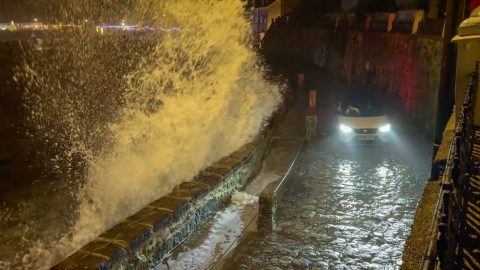
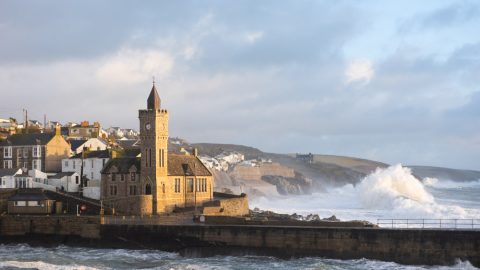
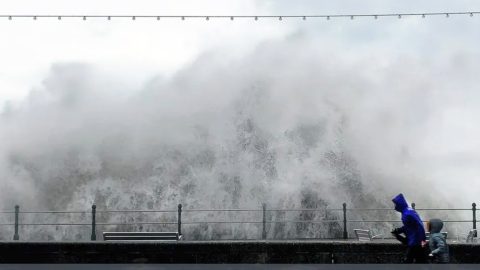
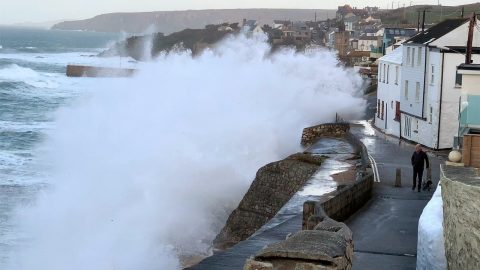
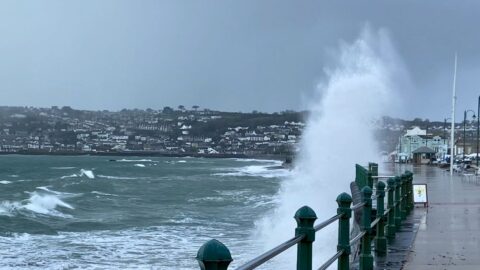
The iconic Penzance Promenade was once again the frontline of Cornwall’s winter weather this week as Storm Chandra brought high winds and significant swell to Mount’s Bay. Following a turbulent start to 2026, the arrival of Chandra on Monday, January 26th, and Tuesday, January 27th, served as a stark reminder of the Atlantic’s power, with waves overtopping the sea wall and spraying the jubilant pool area.
Penzance Promenade Impact
While Penzance is accustomed to rough seas, the combination of Storm Chandra’s easterly tracking winds and high tides created particularly volatile conditions along the seafront. Local coastguards issued standard warnings as spray battered the Victorian promenade, urging storm watchers to keep a safe distance. The sheer volume of water washing onto the walkway forced temporary closures in sections, a necessary precaution given the 70-80mph gusts recorded in exposed coastal locations across western Cornwall.
Unlike previous storms this season which brought more widespread disruption inland, Chandra’s impact on Penzance was visually defined by the sea state. The saturation of the ground from earlier rainfall meant that surface water runoff contributed to the spectacle, but the promenade itself held firm against the barrage, a testament to the town’s historic engineering.
What is Storm Chandra?
Storm Chandra is the third named storm of the 2025/26 season from the Western Europe naming group, which includes the UK Met Office, Met Éireann (Ireland), and KNMI (Netherlands). Its arrival in late January might seem alphabetically out of sequence to those who recall “Storm Goretti” earlier in the month, but there is a bureaucratic explanation for this.
Storms Goretti and Ingrid were named by the South-western European group (including Météo-France), whereas Chandra belongs to the UK’s own list (following Storm Ashley and Storm Bram). The name “Chandra” itself breaks from traditional Western naming conventions; it was submitted by the KNMI and derives from Sanskrit, translating to “bright” or “shining,” and refers to the Hindu god of the Moon. The Met Office and its partners selected the name to reflect the diverse cultures within the naming group nations.
A Season of Storms
Chandra’s arrival marks a continuation of an exceptionally active storm season for Cornwall. Coming so soon after the impacts of Storm Ingrid, the ground in West Cornwall remains heavily saturated, making the region more susceptible to the surface flooding seen during this event. While the winds have now begun to ease, the sea state often takes longer to settle, meaning the spectacle at Penzance may continue for several days after the storm has officially passed.