This walk begins in Porthcurno, one of Cornwall’s most recognisable coastal locations and a place with a long and interesting history. The valley that leads to the beach is narrow and sheltered, with steep granite slopes on either side. At the bottom sits the Porthcurno car park, the main arrival point for most visitors and a practical starting place for walks in the area. At this time of year you can park here all day for £2.80 which is a bargain. From here it is only a short stroll to the beach itself, making it one of the easier access points on this stretch of the coast.

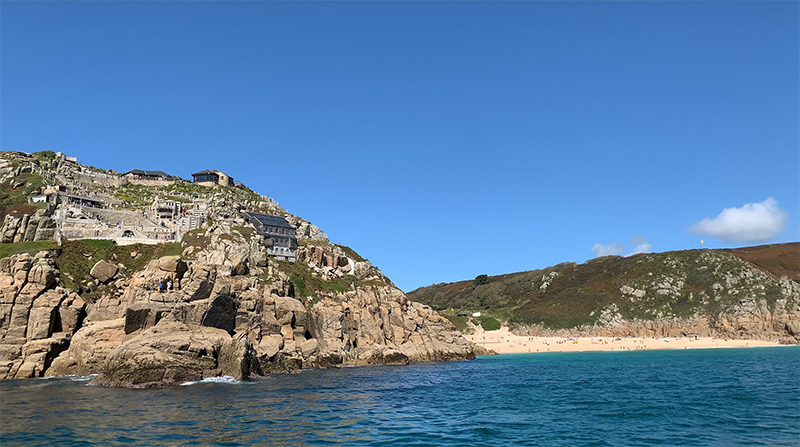
Porthcurno is best known for two things: its international telegraph cable history and the Minack Theatre carved into the cliffs above. During the 19th and early 20th centuries, telegraph cables connected Britain to locations across the world, and many of them landed here. Because of this strategic importance, Porthcurno became a protected site during the Second World War.
Defensive structures appeared along the valley, and the area was guarded around the clock. A reminder of that period still stands above the beach today in the form of the Pillbox FW3/24.
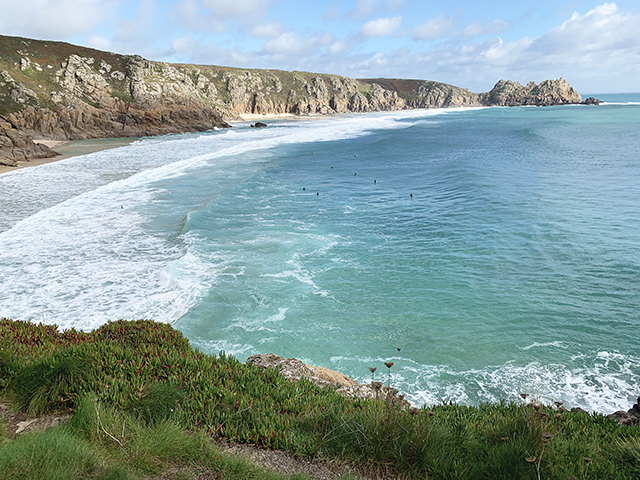
The video begins with a walk down from the car park towards Porthcurno Beach. Even in autumn, the sand here remains bright and fine, and the setting between the cliffs gives the bay a unique shape. On this particular day the tide was in, and the sea was slightly choppy, with rolling waves working their way across the cove. The colour of the water was still clear and blue, especially during the brighter spells of sunshine, and it made a good opportunity to film a few wider shots of the coastline before heading up onto the path.

The weather was fairly typical for an autumn day in west Cornwall. Light changed quickly, with patches of bright sunshine shifting into more muted, grey moments as clouds moved across the sky. These conditions often bring out different textures in the landscape. The granite cliffs took on a deeper tone when the cloud cover thickened, and the sea surface showed more contrast as the wind strengthened. It is the kind of day that works well for filming, because the scene never remains exactly the same for long.

From the beach, the route climbs gradually up towards the defensive pillbox. This small concrete structure was built during World War II and was part of a network designed to protect Porthcurno’s telegraph cables from potential attack. It is positioned just above the bay, giving a clear view of the approaches from the sea. Despite its age, the pillbox remains in solid condition and still offers an interesting vantage point over the coastline. Standing inside or beside it, it is easy to understand how important this valley once was to international communication.

The walk up to the pillbox also provides some excellent elevated views. With the tide pushing higher, waves were breaking closer to the cliffs and creating shifting lines of white water along the shoreline. From above, the colour of the water looked even clearer. The combination of granite, sand and moving light often produces a mix of turquoise and deeper blue tones that Porthcurno is famous for.
After spending time filming around the pillbox and taking in the surrounding scenery, the route continues further along the coast. This marks the transition into part two of the video series, which follows the path towards Pedn Vounder Beach. The coastline becomes slightly more exposed as you move away from the shelter of Porthcurno valley, and the views open out towards Logan Rock and the wider sweep of the cliffs.

This first section of the walk was a good example of autumn in west Cornwall: breezy, bright, occasionally unsettled, but always full of atmosphere. It is a landscape that rewards returning throughout the year, and Porthcurno in particular remains a favourite place to begin a day of filming. Even on shorter walks, the combination of history, scenery and shifting weather gives you something different to capture every time.
Read and watch part two of my autumn walk around Porthcurno and Pedn Vounder here.