Every now and again Longships Lighthouse reminds you that, for all the automation and remote monitoring, it is still a working offshore station that needs very practical support. On this occasion that support arrived by helicopter, bringing fresh water out to the granite tower that sits just off Land’s End in West Cornwall.
About the video
In this video I filmed a helicopter approaching Longships Lighthouse from the Cornish coast, hovering above the Atlantic swell with a delivery of fresh water suspended beneath it. The aircraft holds steady in the wind while pilot skillfully manoeuvres the load into position on the tiny platform at the top of the tower.
A brief history of Longships Lighthouse
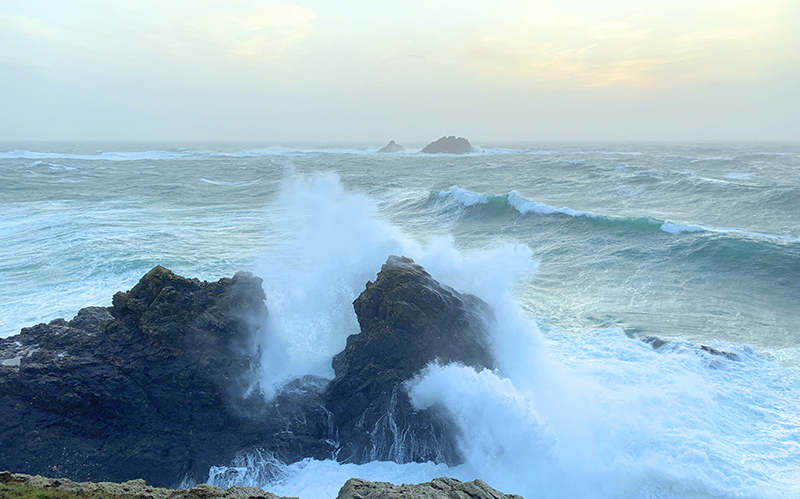
Longships Lighthouse stands on Carn Bras, the highest rock in the Longships reef, about two kilometres off Land’s End. The first lighthouse here went into service in 1795, a relatively squat tower built under lease by Lieutenant Henry Smith after Trinity House was repeatedly petitioned by ship owners for a light to mark this dangerous corner of the coast. Over time it became clear that the original tower was too low for the worst winter seas, and waves were reported breaking over the lantern during heavy storms.
The current granite lighthouse was completed by Trinity House in 1875, built taller and stronger to withstand the Atlantic weather. The tower is 35 metres high and the light sits about 35 metres above mean high water. In clear conditions the light can be seen for around fifteen nautical miles, with different coloured sectors to mark safe water and hazards to passing ships. The station also has a fog signal that sounds during poor visibility, an audible warning that many people who visit Land’s End will recognise from misty days on the cliffs.
Longships was automated in the late nineteen eighties, and the resident keepers were withdrawn. The lighthouse is now remotely monitored and controlled by Trinity House from its operations centre in Harwich, but it still requires regular inspections, engineering work and supplies to keep everything running safely.
Who looks after Longships today
Trinity House is the General Lighthouse Authority for England, Wales, the Channel Islands and Gibraltar. It is both a statutory authority responsible for aids to navigation and a long established maritime charity that supports seafarers. Among its responsibilities are more than sixty lighthouses, lightvessels, buoys and other navigation marks around the coast, including Longships.
Because Longships is an offshore rock station there is no easy way to reach it. Trinity House uses a mix of vessels and specialist helicopters to move engineers, equipment and supplies to sites like this. Helicopter services for the UK and Irish General Lighthouse Authorities have been provided under dedicated aviation contracts with companies such as PDG Helicopters, using aircraft that are set up for short offshore flights, precision hover work and underslung loads. These flights support everything from heavy maintenance projects to routine deliveries of items such as fuel and fresh water.
Why does a lighthouse need fresh water deliveries
There is no natural source of fresh water on the Longships rocks. Historically, keepers on remote lighthouses collected rainwater and relied on casks brought out by boat. Modern stations have storage tanks and systems that provide water for visiting technicians, for safety equipment and for certain technical uses within the station. From time to time those tanks need topping up, particularly after periods of work or bad weather when access has been limited.
Delivering fresh water by helicopter allows Trinity House to take advantage of short weather windows. A sling load can be lifted from a staging point near Land’s End, flown out to the lighthouse and placed accurately on the rock, often in sea conditions that would make a boat transfer slow or impractical. It is a good example of how traditional aids to navigation now rely on quite modern logistics to stay in service.
Recent work and ongoing maintenance
Like many rock lighthouses around the UK, Longships goes through periodic upgrade and maintenance cycles as equipment ages and navigation standards evolve. Over recent years Trinity House has carried out similar re engineering projects at other stations, aimed at reducing power consumption, improving reliability and making maintenance easier on remote sites. Helicopter support is a key part of that work, allowing teams and materials to be moved to and from exposed locations in tight weather windows.
Longships has also appeared in the news from time to time, including a recent technical fault that caused the fog signal to sound more often than normal. Situations like that underline why regular access for engineers is important, and why you sometimes see aircraft or vessels working around the lighthouse from the Land’s End cliffs.
Filming the operation from the Cornish cliffs
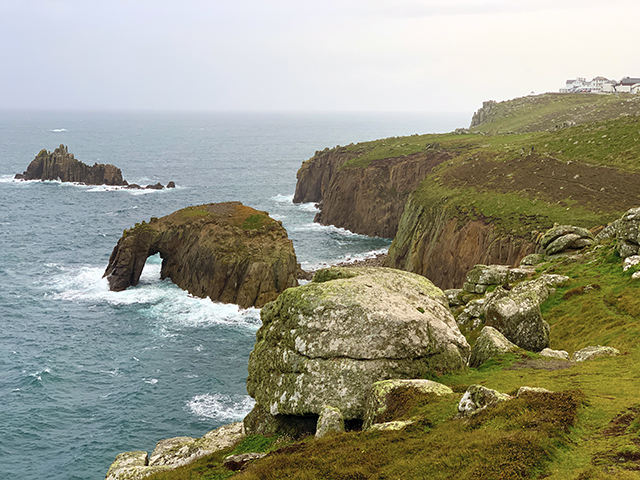
From a filming point of view this kind of operation is a fascinating mix of seascape, engineering and aviation. The Longships reef, the granite lighthouse tower and the cliffs of Land’s End already make for a dramatic setting, and when you add a working helicopter and an underslung load you get a strong sense of scale and exposure. Watching from the mainland you see how small both the aircraft and the lighthouse look against the Atlantic, and how precise the flying has to be to place a load safely on the rock.