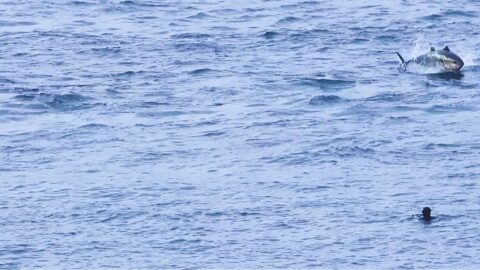
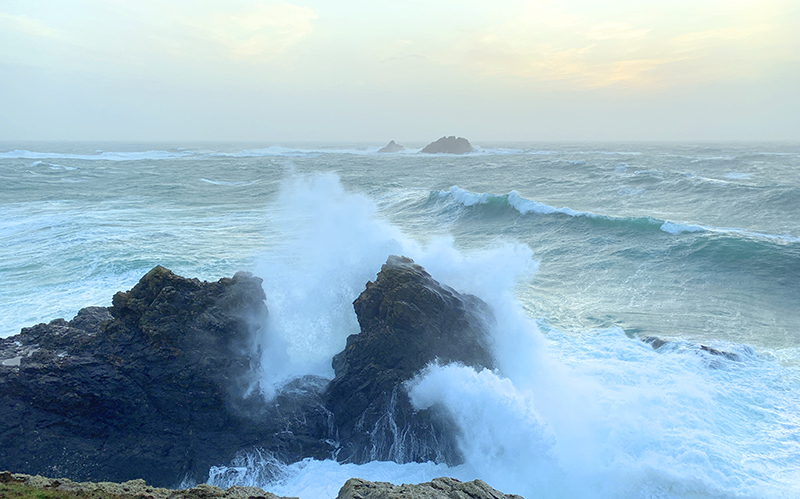
I’ve been down to Land’s End three times this October and only caught a couple of Bluefin Tuna breaching the surface. Today was a very welcome return to form, and about as good as Bluefin Tuna feeding frenzies get here.
I sat and watched the spectacle for around three hours in the freezing cold, and it was worth every minute. Here are the highlights.
Bluefin Tuna at Land’s End: What I Saw
If you’ve never seen Bluefin Tuna hunting from the Cornish coast, it’s hard to describe. One moment the sea is calm, and the next the surface erupts as these huge predators chase shoals of smaller fish.
I’ve been filming the Bluefin Tuna off Cornwall for the last four years, and my videos have been featured on BBC Cornwall and ITV. In that time I’ve learned that patience is everything. My first three visits this month gave me only the occasional breach, but sessions like today’s are why I keep going back, even on a cold October day with the wind coming straight off the Atlantic.
The Return of Bluefin Tuna to Cornwall
Seeing Bluefin Tuna off Cornwall is a relatively new thing. Atlantic Bluefin were largely absent from UK and Irish waters for more than half a century, a legacy of historic overfishing across the North Atlantic. Sporadic sightings continued into the 1990s, after which they were thought to have disappeared from British waters altogether.
That changed in the early 2010s, when Bluefin began staging a comeback around the English Channel and the west coast of Ireland. Today they return to the waters off Devon and Cornwall every summer, and they can be seen well into the autumn. That’s why Land’s End can still produce sightings in October.
Why Are Bluefin Tuna Back?
Scientists point to a few likely reasons:
Better management of the species. Quotas introduced when Atlantic Bluefin numbers were in steep decline helped populations recover, and that’s widely seen as a major factor in them reappearing around the UK.
Plenty of food. Bluefin come here to feed on smaller fish such as garfish, herring, mackerel, sprats and sardines, which are doing well in the warming waters of the Atlantic and may be drawing the tuna further north.
Warming seas. Government scientists have suggested that rising sea temperatures could be part of the reason, which makes the return a more complicated story than simple good news.
How Big Do Bluefin Tuna Get?
Atlantic Bluefin are among the biggest and most sought-after fish in the ocean, and they can grow up to about 12 feet long. (a friend of a friend caught a 12 footer off the coast of Hayle in 2025) Seeing even a small part of that power burst through the surface is something you don’t forget.
Research and Conservation in Cornwall
The University of Exeter’s Penryn Campus in Cornwall is leading a project called “Bluefin Tuna: Feeding the Comeback”, which studies what the tuna are eating in UK waters and why this area has become an important seasonal feeding ground. Cornwall Wildlife Trust has described the return as a real sign of hope in a rapidly changing world, and after four years of filming them, I’d agree.
Tips for Watching Bluefin Tuna from the Cornish Coast
- Be patient. Sightings can be unpredictable, as my first three trips this month showed.
- Wrap up warm. October at Land’s End is exposed and cold.
- Look for the signs. Diving seabirds and disturbed water often show where fish are feeding.
- Bring binoculars or a long lens to get closer to the action without disturbing anything.
- Take care near the cliff edges, especially in windy weather.
Watch More Bluefin Tuna Videos
This isn’t my first Bluefin Tuna video from Cornwall, i’ve been filming them down at Lands End for the last four years. Check out my other Bluefin footage on the JVsCornwall YouTube channel, and subscribe so you don’t miss the next wildlife encounter.